✦ CISNEROS REAL ESTATE EXPERT ✦
If you are buying or selling a waterfront home in New Hampshire, the septic rules have changed.
As of September 1, 2024, the state now requires a septic system evaluation before transfer if any part of the septic system is within 250 feet of the shoreland reference line. The key shift is this: the responsibility moved from the seller to the buyer. The buyer now hires and pays for a licensed septic evaluator before closing. If the system shows signs of failure, the buyer must replace it within 180 days after closing.
The sale is not automatically stopped if problems are found. However, notification to the state and the local health officer becomes mandatory, and replacement deadlines are triggered.
This change was designed to protect New Hampshire’s lakes and drinking water by identifying and correcting failing septic systems near shorelines more quickly.
If you want to understand how this works in detail, keep reading below.
The rule applies when:
It is not just about whether the house is near the water. It is about where the septic components are located.
This affects many properties around Lake Winnipesaukee and other lakes and shoreland areas across the state.
Under the current law, the buyer:
This is a major shift from the prior law, which required the seller to perform a site assessment study before signing a purchase and sale agreement.
The evaluator:
If the system:
The buyer must hire a permitted designer to:
The New Hampshire Department of Environmental Services and the local health officer:
If failure is identified:
This creates a clear post-closing compliance deadline.
Under the new law:
Of course, buyers and sellers can negotiate credits or price adjustments in the purchase contract. The statute assigns responsibility, but contracts can allocate costs differently.
In short, the system shifted from seller disclosure to buyer evaluation and mandatory remediation timelines.
New Hampshire’s lakes are an economic and environmental asset. Septic systems located close to shorelines can contribute nutrients such as nitrogen to groundwater and surface waters.
Nutrient loading contributes to cyanobacteria blooms, which have become more common across the state. The goal of the new law is to shorten the time between identifying a failing septic system and fixing it.
This is especially relevant in high-density waterfront areas like Lake Winnipesaukee.
If you are buying or selling waterfront property in the Lakes Region:
Waterfront property carries unique value. It also carries unique regulatory obligations.
If you are buying or selling waterfront property in the New Hampshire Lakes Region, especially around Lake Winnipesaukee, Squam Lake, or Newfound Lake, the septic transfer rules have changed.
As of September 1, 2024, New Hampshire requires a septic system evaluation before closing when any portion of the septic system is within 250 feet of the shoreland reference line. This impacts homes in Meredith, Laconia, Gilford, Moultonborough, Wolfeboro, Tuftonboro, Center Harbor, and Alton, where shoreline proximity is common.
The key shift is this: the responsibility moved from the seller to the buyer. Buyers now hire and pay for a licensed septic evaluator prior to transfer. If a system shows signs of failure, the buyer must replace it within 180 days after closing and obtain state operational approval.
The sale does not automatically stop if a problem is found. However, the state must be notified, and replacement deadlines are triggered.
If any part of the septic system on a waterfront home in Meredith, Gilford, Laconia, or Moultonborough is within 250 feet of the shoreland reference line, the buyer must complete a septic evaluation before closing.
Yes. The rule applies statewide but heavily impacts Lakes Region communities such as Wolfeboro, Tuftonboro, Alton, Center Harbor, Meredith, and Laconia because many homes are within the 250-foot threshold.
The state updated the law to accelerate correction of failing septic systems near lakes and reduce nutrient runoff contributing to cyanobacteria blooms in lakes like Lake Winnipesaukee.
No. A sale in Gilford, Meredith, or Wolfeboro can still close even if a septic system fails. However, the buyer must replace the system within 180 days after transfer.
The New Hampshire Department of Environmental Services works with local health officers in towns such as Laconia, Meredith, and Moultonborough to enforce compliance.
Understanding when the law applies is critical for waterfront buyers and sellers in the Lakes Region.
It applies when any portion of the septic system is within 250 feet of the shoreland reference line. Many homes in Meredith Bay, Governors Island, and Gilford shoreline neighborhoods fall within this threshold.
The trigger is based on septic component location, not where the house sits. In Moultonborough and Wolfeboro, septic systems are often closer to the water than the structure itself.
Yes. Older seasonal camps in Tuftonboro, Alton Bay, and Center Harbor frequently have systems approved prior to 1989, which require additional designer evaluation.
Yes. A multi-million dollar estate in Meredith or Moultonborough is subject to the same septic regulations as a smaller lake cottage.
Yes. The rule applies statewide and includes properties on Squam Lake in Holderness and Center Harbor, and on Newfound Lake in Bristol and Hebron.
Waterfront buyers in the Lakes Region now carry primary statutory responsibility for septic evaluation and potential replacement.
The buyer must hire a licensed New Hampshire septic system evaluator before closing if the septic system is within 250 feet of the shoreland reference line.
The buyer pays for the septic evaluation under current law, even if the property is listed in Meredith Bay, Governors Island, or Alton Bay.
The evaluation must be completed prior to transfer of ownership. It should be scheduled early in the contract period to avoid delays in closing.
If the buyer intends to replace the system within 180 days after closing, they may bypass the evaluation, but they must notify the state and local health officer prior to transfer.
Yes. If failure is identified, the buyer must replace the septic system within 180 days after closing.
While the statute shifted responsibility to buyers, sellers still face practical transaction considerations.
No. The prior seller site assessment study requirement was eliminated.
Yes. Providing state approval documents and system history helps reduce transaction risk and buyer hesitation.
Yes. Buyers and sellers may negotiate credits or price adjustments in the purchase contract.
Generally, no, unless specific contract provisions state otherwise.
Often yes. A recently approved septic system can reduce buyer concern and strengthen pricing.
Understanding when the law applies is critical for waterfront buyers and sellers in the Lakes Region.
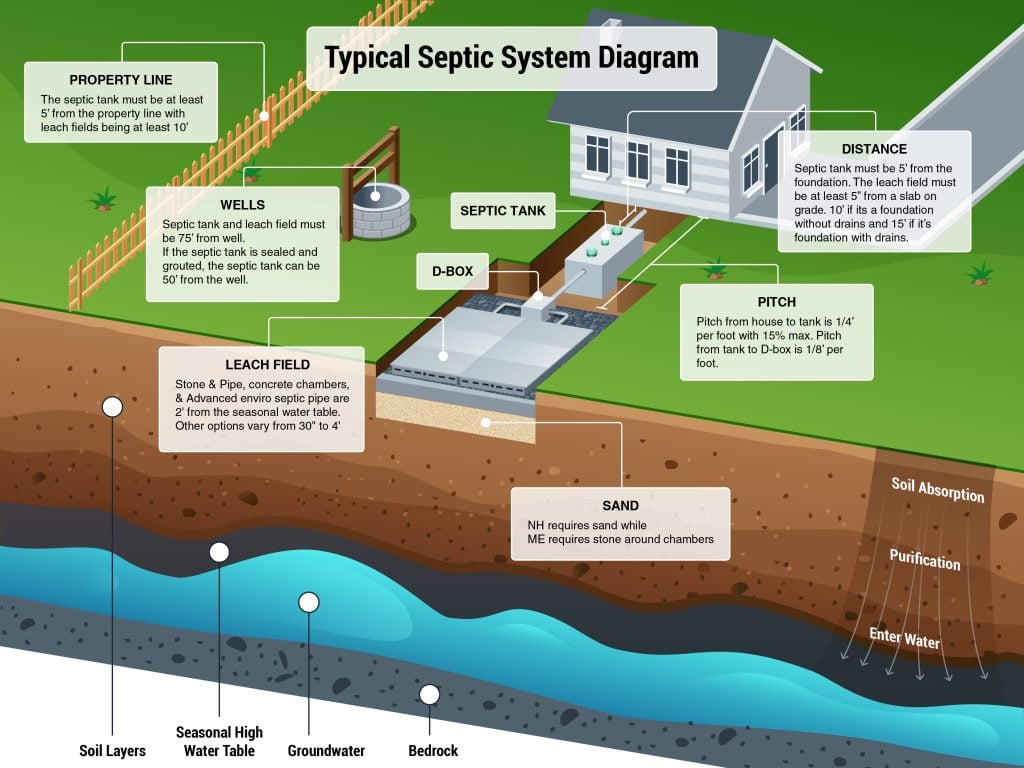
The evaluator inspects tank condition, leach field function, signs of effluent surfacing, and compliance indicators.
A permitted septic designer must evaluate the effluent disposal area relative to seasonal high water table and determine failure status.
Signs of failure include surfacing sewage, improper treatment, groundwater contamination risk, or structural failure of system components.
The New Hampshire Department of Environmental Services and the local health officer in towns such as Meredith or Laconia must be notified.
No. A septic evaluation is a specialized, licensed procedure separate from a general home inspection.
The 180-day deadline is one of the most important aspects of the new law.
If failure is identified in a qualifying waterfront transfer, the buyer must replace the septic system within 180 days after closing.
Yes. The sale may proceed, but the replacement clock begins after transfer.
The state may pursue enforcement action, including potential fines.
The statute establishes a firm timeline. Extensions may be possible in limited circumstances but are not guaranteed.
Seasonal conditions can complicate installation timing, especially in Moultonborough or Tuftonboro. Planning early is essential.
Replacement systems must comply with state approval standards.
A permitted septic designer licensed by the state prepares plans and specifications.
A state-permitted septic installer must perform the installation.
Yes. Approval for Operation must be issued before the system is placed into service.
Yes. Final inspection approval is required before the system is covered and operational.
Yes. Municipalities may adopt stricter standards under RSA 674:21.
Septic costs vary significantly depending on site constraints.
Costs vary depending on system complexity and property layout.
Replacement costs vary widely depending on soil conditions, water table elevation, and lot size.
Yes. State review and permitting fees apply to replacement systems.
Yes. Buyers and sellers may negotiate escrow arrangements to address known replacement costs.
Some state or local funding programs may be available, subject to eligibility.
Waterfront septic compliance can influence financing.
Many lenders require proof of evaluation for waterfront properties.
Yes. Replacement costs may affect loan qualification and underwriting.
Yes. If evaluations are not completed in time, closing may need to be extended.
Some insurers may request confirmation that the system is functional and compliant.
Yes. Buyers purchasing waterfront property in Meredith, Gilford, or Wolfeboro should discuss septic obligations with lenders early in the process.
Waterfront septic compliance is especially relevant in the Lakes Region.
Yes. Many older seasonal camps in Tuftonboro, Alton Bay, and Center Harbor have systems approved before 1989.
Yes. Smaller lots common in Meredith and Gilford often face design constraints due to water table and setback requirements.
Yes. High-density shoreline areas in Moultonborough and Laconia are subject to greater environmental sensitivity.
Yes. Price point does not exempt properties from septic regulations.
Yes. Due to development density and shoreline proximity, septic regulations significantly impact waterfront transactions around Lake Winnipesaukee.

OFFICE
61 Liscomb Cir
Gilford, NH 03249
OFFICE
61 Liscomb Cir
Gilford, NH 03249