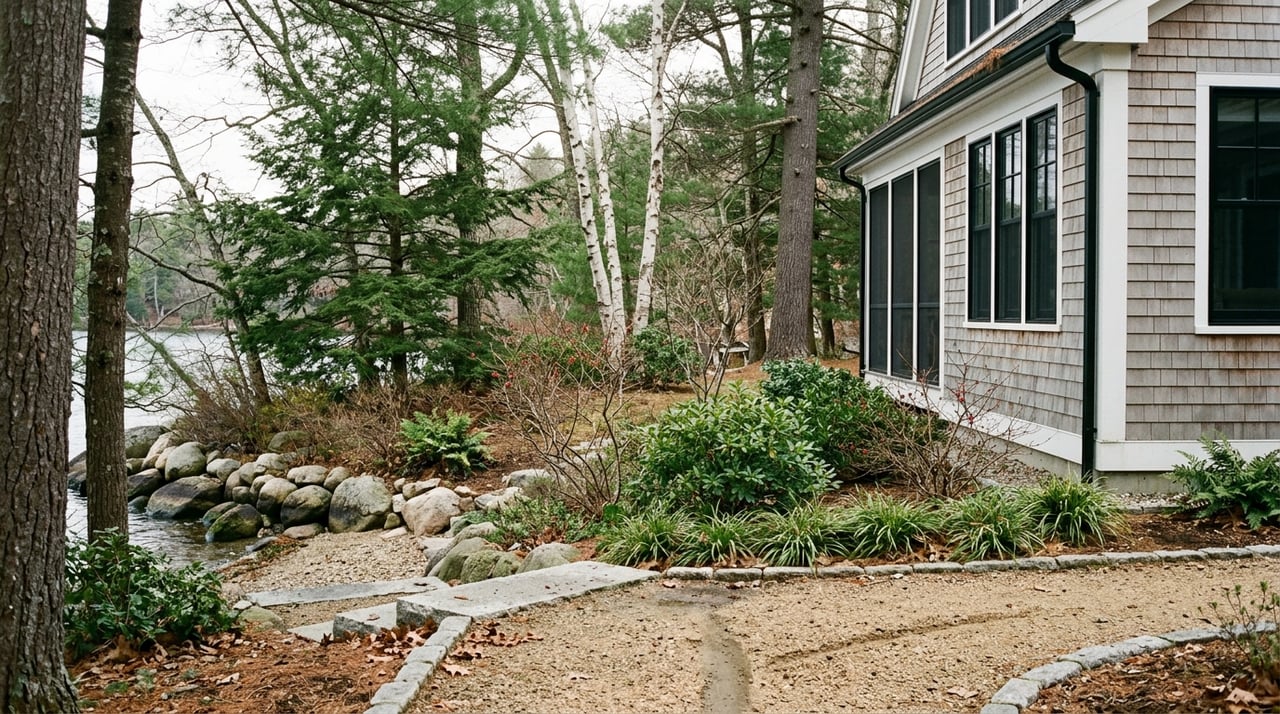
Buying on Squam Lake can feel like a dream until you realize the shoreline itself comes with rules. If you are looking at waterfront property in Holderness, it is not enough to love the view or the dock setup you see today. You also need to understand what state shoreland law and local zoning may allow, restrict, or require after closing. This guide will help you sort through the big issues so you can buy with more clarity and fewer surprises. Let’s dive in.
Why conservation rules matter in Holderness
In Holderness, a Squam Lake purchase is about more than the home. It is also about what sits within protected shoreland, how much frontage the lot has, where the septic system is located, and whether any dock or shoreline work was properly approved in the past.
Under New Hampshire shoreland law, protected shoreland generally includes land within 250 feet of the reference line along public waters. That matters on Squam Lake, and Holderness also applies its own shoreline-related zoning rules through the 2025 Zoning Ordinance.
The result is simple: what you inherit with a waterfront property is not just the structure, but the property’s legal and physical limits. That is why due diligence matters so much before you close.
Squam Lake frontage rules to know
If a lot in Holderness has its boundary on Squam Lake, frontage standards are a key issue. In the town’s residential and commercial districts, those lots must have at least 200 feet of water frontage under local rules.
That local standard is stricter than the state minimum for creating new lots with frontage on public waters, which is 150 feet under state shoreland law. For buyers, that can affect subdivision potential, lot configuration, and how you evaluate long-term use of the property.
If you are comparing multiple waterfront homes, frontage is not just a number on paper. It can influence privacy, dock placement, lot flexibility, and future permitting.
Docks are not automatically approved
One of the biggest buyer mistakes on Squam is assuming an older dock is automatically legal or fully grandfathered. That is not always true.
Under New Hampshire wetlands law, new docks and dock modifications generally require permitting through NHDES. Some temporary seasonal docks may qualify for an exemption, but only if they meet specific standards and proper notice is provided.
Because Squam Lake is listed at 6,790.7 acres, the seasonal dock length limit tied to larger lakes is relevant here. That means a qualifying seasonal dock may be no more than 6 feet wide and 40 feet long, among other requirements.
Those rules come with other limits too, including:
- The dock must be the only docking structure on the frontage
- It must be removed for at least 5 months each year
- It must be at least 20 feet from abutting property lines
- It must be installed without regrading the shoreline
If a dock sits closer than 20 feet to an abutter’s property line, written notarized consent must be filed with the application under state law. That makes boundary accuracy especially important during due diligence.
Holderness rules for overwater structures
Holderness is also stricter than some buyers expect when it comes to shoreline structures. Under the town’s zoning ordinance, boathouses located in or over the water are prohibited, and dug-in boat slips are prohibited as well.
Stairs to an approved dock may be allowed, but only in limited form. They may be no wider than 4 feet and must be built so air and moisture can still reach the ground below.
That means you should not assume every attractive waterfront feature you see elsewhere around the Lakes Region would be allowed on a Holderness property. On Squam, the rules are often narrower and more site-specific.
Renovation limits near the shoreline
A lot of buyers look at an older lake house and immediately start planning additions, rebuilds, or a larger outdoor living area. Sometimes that is possible. Sometimes it is not.
Under state shoreland law, existing nonconforming structures in protected shoreland may generally be repaired, replaced in kind, reconstructed in place, altered, or expanded. But they may not be moved closer to the reference line.
That is a major point for waterfront buyers. If a home is already close to the lake, your future options may be tighter than the lot size or asking price suggests.
The law also says a deck or open porch located between the primary structure and the water may not be enclosed or converted to living space. So if you are hoping to turn an open lakeside porch into finished square footage later, that may not be allowed.
Septic and impervious surface issues
Septic is one of the most important behind-the-scenes issues on waterfront property. If a renovation increases septic load or changes septic use, state subsurface approval is required under shoreland law.
Holderness also has its own shoreline setbacks for septic components. No septic tank may be within 75 feet of a lake or pond reference line, and no leach field may be within 125 feet.
Impervious coverage can be another hidden constraint. State law generally limits impervious surfaces within protected shoreland to 30 percent of the lot unless a professionally engineered stormwater system is implemented. If impervious area will exceed 20 percent, a stormwater system must be installed and maintained.
In practical terms, that can affect plans for:
- Home additions
- Larger driveways
- Patios and hardscape
- Expanded parking areas
- Accessory structures
A waterfront property can look like it has room to grow, but the shoreland math may say otherwise.
Trees, clearing, and view corridors
Another common misunderstanding is that you can simply clear more trees to open a better lake view. On Squam, that assumption can create trouble quickly.
Within the first 50 feet from the reference line, the waterfront buffer is tightly regulated under state law. Holderness reinforces that approach by requiring that 50-foot strip to remain a native vegetative or woodland buffer, with no structure allowed within that area under the local zoning ordinance.
Access pathways through that buffer may not exceed 6 feet in width. State law also allows a permanent 6-foot foot path to docks, beaches, structures, existing open areas, and the water body, as long as it does not concentrate runoff or cause erosion.
From 50 to 150 feet, the woodland buffer has its own standards. At least 25 percent of that buffer area must remain natural woodland, and it must stay unaltered or be improved with additional vegetation.
For properties and easements legally developed before July 1, 2008, existing cleared areas like lawns, gardens, beaches, and utility rights-of-way may be maintained, but they may not be enlarged under state law. That is an important distinction if you are counting on future view expansion.
Older and nonconforming lots
Some waterfront parcels in Holderness are older, smaller, or nonconforming by today’s standards. That does not always mean they are unusable.
State law may still allow a single-family dwelling and accessory structures on a nonconforming undeveloped lot of record in some situations. But local zoning, frontage requirements, and shoreland constraints still apply.
This is where buyers need to be especially careful. A lot that appears buildable in theory may still face meaningful limits tied to frontage, setbacks, septic design, buffers, or impervious coverage.
Smart due diligence before you buy
If you are considering a Squam Lake property in Holderness, the best protection is to verify what already exists before you make assumptions about future use. The legality of future work often depends on prior approvals, exact shoreline measurements, and where property lines actually fall.
Before closing, ask for:
- Existing dock permit or registration records
- Any prior shoreline-related DES approvals
- Septic approvals and system information
- Documentation tied to past reconstruction or shoreline work
- A clear understanding of the reference line and abutter boundaries
This is especially important if the value of the property depends on dock access, expansion potential, or the ability to update an older structure. A waterfront home can be a great purchase and still require careful review.
Squam Lake conservation rules do not mean you cannot make changes. They mean changes are often location-sensitive, permit-driven, and narrower than many buyers expect. If you want help evaluating waterfront risk, resale implications, and the real-world limits behind a beautiful listing, connect with Cisneros Realty Group for clear, protective guidance.
FAQs
What do Squam Lake conservation rules mean for a buyer in Holderness?
- They mean your use of the property may be shaped by state shoreland law, local zoning, dock rules, septic setbacks, vegetation buffers, and any prior permit history tied to the lot.
Can a buyer in Holderness assume an existing Squam Lake dock is grandfathered?
- No. An older dock may still depend on valid registration, prior lawful permits, or other documentation under New Hampshire wetlands law.
Can a waterfront owner in Holderness clear more trees to improve a Squam Lake view?
- Not freely. Vegetation clearing is limited within the waterfront and woodland buffers, and pre-2008 cleared areas may be maintained but not enlarged under state shoreland law.
Can a nonconforming lake house in Holderness be rebuilt closer to Squam Lake?
- No. Existing nonconforming structures may often be repaired or reconstructed, but they may not be moved closer to the reference line under shoreland law.
What documents should a Squam Lake buyer request before closing on a Holderness property?
- Ask for dock permits or registrations, septic approvals, shoreline-related DES records, and any documentation that confirms past work and current compliance status.